Showing posts with label Earth. Show all posts

Tuesday, October 8, 2024

Did Earth Once Possess a Ring Like Saturn?

 When I show people astronomical sights through my telescope, the one view that elicits the most comments is Saturn with its rings. Many times I’ve heard people say “Wow! That’s amazing.” Or, “Oh, that’s not real. You have a picture in there.” Saturn, more than any other common backyard telescope target, looks like the pictures you’ve seen in books.
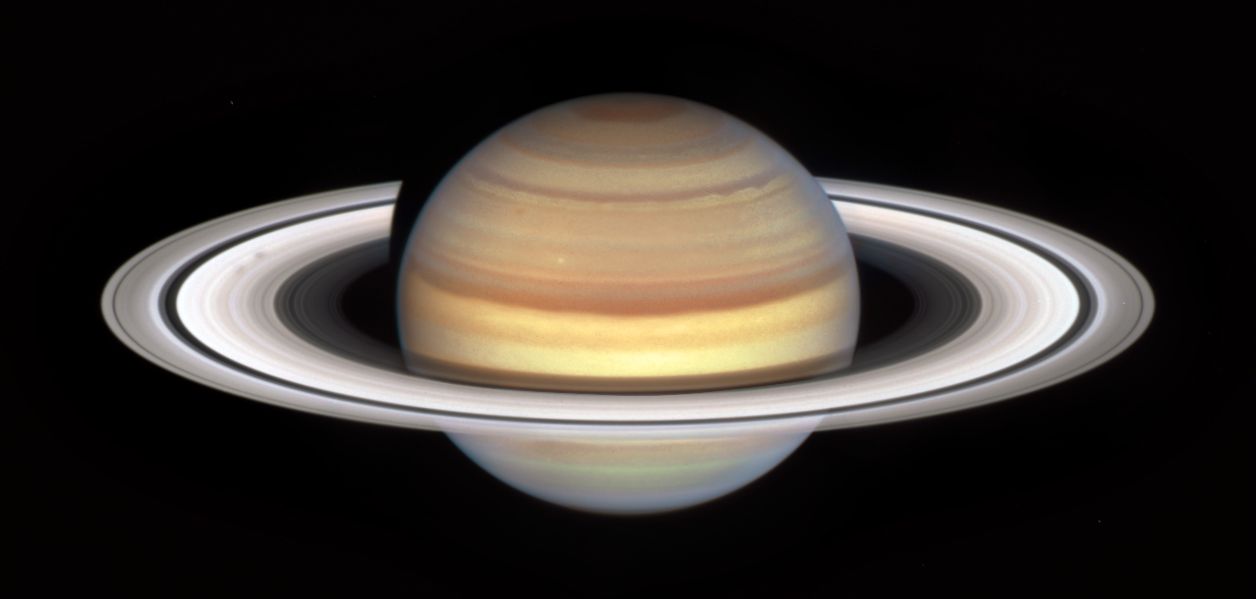
Saturn.


Saturn isn’t the only planet with a ring system. Jupiter, Uranus, and Neptune also have rings but are only visible with very powerful telescopes or spacecraft passing nearby.

Imagine the sense of awe if we lived on a planet with rings, something we sometimes see in science fiction movies. Had you been around on Earth 466 million years ago, you might have been able to enjoy that very experience. A recent study suggests that Earth may very well have sported a ring like Saturn.

Artist's conception of Earth with rings.

Planetary rings are ephemeral. They don’t last forever, although they do exist for millions of years. The evidence for Earth’s possible ring is circumstantial but quite intriguing. Starting about 466 million years ago, Earth experienced a period of enhanced meteor cratering, a period known as the Ordovician impact spike. During that cratering period, virtually all of the impacts on Earth, centered on a narrow band along the equator. Typically, impacts should occur randomly over the Earth’s surface.

This narrow cratering band implies that the objects striking Earth all came from that area of the sky over the equator. The easiest explanation for such a narrow band of cratering events along the equator is a ring of debris encircling our planet. If a ring forms around a planet, it will always settle over the equator.

During the same time frame, sedimentary rocks show a large increase in L chondrite material. L chondrite-type asteroids are common in the asteroid belt. Denizens in the asteroid belt occasionally collide, scattering debris around the solar system. 

Artist's conception of two asteroids colliding. 


The researchers, led by Andrew G. Tomkins, a geologist at Monash University in Australia, suggest that one large fragment came close to Earth, passing so closely that Earth’s gravity shattered it and the debris formed a ring.

Based on the cratering record, the study participants claimed the ring lasted approximately 40 million years, a typical lifetime for a planetary ring. During that same period of time, Earth experienced one of its most intense glaciation events and mass extinctions known as the Hirnantian global icehouse period. The researchers suggest that shading from the ring decreased solar radiation reaching the planet’s surface, triggering the short but intense glaciation period. “The existence of such a ring, forming around 466 million years ago and persisting for a few tens of millions of years could explain several puzzles in our planet’s past,” Tomkins wrote.

None of this evidence is absolute proof that we once had a ring like Saturn’s, but it is strongly suggestive. More work needs to be done to help corroborate their conclusion.


Each month, I write an astronomy-related column piece for the Oklahoman newspaper. After publishing it there, I post that column on my blog page.

 This is reprinted with permission from the Oklahoman and www.Oklahoman.com.

Saturday, July 16, 2022

Earth will be destroyed by our Sun

 Like everything else in nature, astronomical objects change and evolve in time. Take our sun, for instance. When it first formed, our sun slowly fused hydrogen into helium, just like a hydrogen bomb. As it aged, it became more compact which increased the rate of hydrogen fusion in its core. It now emits 30% more energy than when it first started starting fusing hydrogen.

As the hydrogen fuel is slowly consumed, the helium “ash” builds up in the core causing the hydrogen fusion area to move closer to the surface. This heats the surface of our star causing it to swell, making the sun expand. Eventually, our sun, as do all stars like it, will evolve into a red giant star, one hundred times larger than it is now.


Our sun as a red giant star, scorching Earth. Credit NASA.

At that point, our star’s surface will extend farther than Earth’s current orbit, swallowing Mercury and Venus, the planets closer to the sun than Earth. It’s not automatic that Earth will be consumed by the growing sun. As the sun grows, it blows off more and more material as solar wind. As the sun’s mass decreases, Earth will slip farther out. But even if Earth survives, and most astronomers think it won’t, our planet will become so hot that the oceans will boil and fires will consume all life on the planet.

Earth being destroyed by Red Giant sun. Credit NASA.

By studying the light spectrum of stars, astronomers can measure their chemical makeup. The chemical abundances of some stars in our galaxy at a more advanced stage of stellar evolution than our sun reveal that planets once orbiting that sun have been engulfed and destroyed in the fiery atmosphere of the star. They find elements in the star that can only have come from orbiting planets. They can see that these suns devour their planets as they age and grow larger, just as our sun will do one day.

Alien astronomers on other planets studying our solar system a few billion years in the future will be able to detect the remnants of Mercury and Venus. Will they also detect the remnants of Earth? We don’t yet know for sure, but we do that we humans will have either perished or moved out into space in search of Earth 2.0.


Each month, I write an astronomy-related column piece for the Oklahoman newspaper. On the following day, I post that same column to my blog page.

       This is reprinted by permission from the Oklahoman and www.Oklahoman.com.


Tuesday, January 4, 2022

Earth's Black Box

 A plane crashes in the mountains. Or in a desert, on takeoff or landing, or in an empty field. Wherever it crashes, the first thing investigators look for is the plane’s black box, the Flight Data Recorder. That device, actually bright orange to make it easily visible, records everything that occurred in the cockpit from takeoff to crash. Every change of altitude, bearing, speed, whether or not it was done by the pilot or the auto-pilot. 

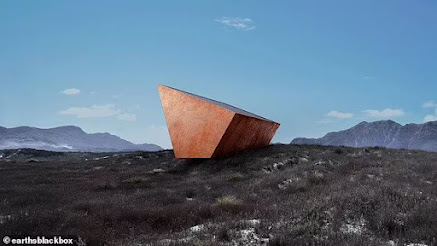
The black box records every conversation in the cockpit, among the crew and the control towers. Investigators can recreate the crash to learn what, if any, mistakes were made. This year, Earth gets its own black box. Earth's Black Box, will scrupulously record every bit of data related to civilization’s demise, whenever it occurs. Earth's Black Box website says "Unless we dramatically transform our way of life, climate change and other man-made perils will cause our civilization to crash." 

The death of civilization may come from climate change or pollution that makes Earth uninhabitable. It may come from nuclear war, a deadly pathogen, or even a giant asteroid wiping out life on our planet. 


Artist's Rending of Earth's Black Box. Credit https://www.EarthsBlackBox.com


Earth’s Black Box’s hard drives will collect temperature measurements, ocean acidification data, land use data, military spending, energy consumption, and human population growth. Data collection will primarily track climate data because the creators, a collaboration between the University of Tasmania, a communications firm called Clemenger BBDO, and an art collective called the Glue Society who will help design its appearance, believe climate to be the most immediate danger that civilization faces. 

The entire object will be enclosed in 3-inch-thick steel designed to withstand any catastrophe. And just like a plane’s black box is tucked away in the safest part of a plane, the tail section, Earth's Black Box will be placed in a secure, in the desert of Tasmania, where civilization is not likely to encroach on it. 

From the Earth’s Black Box website: “The purpose of the device is to provide an unbiased account of the events that lead to the demise of the planet, hold accountability for future generations, and inspire urgent action. 

“How the story ends is completely up to us. 

“Only one thing is certain, your actions, inactions, and interactions are now being recorded.”


Each month, I write an astronomy-related column piece for the Oklahoman newspaper. On the following day, I post that same column to my blog page.

 This is reprinted by permission from the Oklahoman and www.Oklahoman.com.


Thursday, December 3, 2020

Are We Close to Finding Earth 2?


NASA and other space agencies have launched several missions to search for exoplanets, planets that orbit other stars. The Holy Grail of such programs is finding an Earth-like planet orbiting a sun-like star at the right distance to allow liquid water on the surface. Such planets seem to be the most likely candidates to search for life.

While astronomers have yet to find a perfect Earth 2, statistical analysis of NASA’s most successful planet hunter, the Kepler Mission, uncovered some promising data. A study by NASA scientists alongside collaborators from around the world who worked on the Kepler mission came to an exciting conclusion. According to the research, about half the stars similar in temperature to our Sun could have a rocky planet capable of supporting liquid water on its surface.


Image Caption/Credit: NASA’s Kepler Planet Finder telescope, credit NASA


"Kepler already told us there were billions of planets, but now we know a good chunk of those planets might be rocky and habitable," said the lead author Steve Bryson, a researcher at NASA's Ames Research. "Though this result is far from a final value, and water on a planet's surface is only one of many factors to support life, it's extremely exciting that we calculated these worlds are this common with such high confidence and precision."

Kepler detected planets by continuously staring at thousands of stars, watching for a tell-tale drop in brightness caused by an orbiting planet crossing in front of a star. Such a method couldn’t detect planetary systems seen more face on, so astronomers had to use statistical methods to extrapolate from the Kepler data to all the other stars in our galaxy. Kepler discovered so many exoplanets from its limited mission that astronomers now believe that more than half of the four billion stars in the Milky planet possess planets, typically more than one.

Using their most conservative estimate, that 7% of all sun-like stars have Earth-like planets, meaning some 300 million exist in our Milky Way alone. Their most likely estimate states that Earth-like planets orbit 50% of sun-like stars, making more than 2 billion Earth-like planets. Since we know of only one planet with life, ours, those planets are the best place to begin to search for alien forms of life.


Each month, I write an astronomy-related column piece for the Oklahoman newspaper. On the following day, I post that same column to my blog page.

 This is reprinted by permission from the Oklahoman and www.newsok.com.

Tuesday, August 4, 2020

Can Earth-like Exoplanets Actually Support Life?

As of July 4th, the NASA Exoplanet Archive (https://exoplanetarchive.ipac.caltech.edu/) lists 4,183 confirmed exoplanets, planets orbiting other stars, with another 2089 candidate planets awaiting confirmation. NASA and other institutions have only studied a tiny percent of all the stars in our Milky Way. Based on the sample so far, astronomers estimate that planets outnumber stars in our galaxy. That means the Milky Way contains several hundred billion planets.

These exoplanets come in a bewildering variety. Some are Jupiter-sized planets so close to their parent star that the heat from the star evaporates them. Some Earth-sized planets get so hot, they rain liquid metal from their clouds. Most confirmed planets are significantly larger than Earth, but that’s because larger planets are easier to discover than smaller planets. Astronomer estimate that Earth-sized planets number in the billions.


   Most Earth-like Exoplanets, credit NASA


Being the size of Earth doesn’t mean such a planet has life on it. Many factors play into planet habitability. Distance to its parent star determines surface temperature. Too hot or too cold and habitability becomes unlikely. The type of parent star plays a crucial role. Stars smaller than our sun often produce large, dangerous stellar flares.

If Earth is a good example of what conditions necessary for a planet to support life, water is an absolute must. On our planet, where there’s water, life exists, even at the bottom of the ocean, with near-freezing temperatures, in boiling hot springs, or three miles underground in cracks in the rock.

Scientist Lynnae Quick along with several other NASA scientists looked at the likelihood of finding other life-bearing planets. This initial study contained a small sample of only 53 Earth-sized planets. They specifically looked to see if the planets could support surface or subsurface oceans, as is the case with several moons in our own solar system. Of those, they calculated that 30 likely possess such bodies of water, more than half of the planets they analyzed. With a few billion Earth-sized planets in our galaxy alone, that means there might be a lot of life-bearing planets out there. "Forthcoming missions will give us a chance to see whether ocean moons in our solar system could support life,” said Quick.

The study didn’t address the presence of intelligent aliens. There isn’t enough data to decide that. But at least we have some idea of the possibilities now.


Each month, I write an astronomy-related column piece for the Oklahoman newspaper. On the following day, I post that same column to my blog page.

 This is reprinted by permission from the Oklahoman and www.newsok.com.


Thursday, June 11, 2020

Walk the Entire Vertical Relief of Earth


AUTHOR’S NOTE: Since this was originally written for the Oklahoman newspaper, I used reference points in Oklahoma. So, I’ve added the distances to the streets/cities listed here so you can figure out the same for wherever you live.

Now that restrictions related to the COVID-19 pandemic have been relaxed, I imagine a lot of folks are out and about. Perhaps you are walking more, going to the park again, or even taking trips to some of our state’s great outdoor attractions.
Here’s a trip idea: walk to the top of Mt. Everest, the tallest point on Earth. Or to the bottom of the Mariana Trench, the lowest point on Earth. Think those are impossible walks? Of course, they are, but you can walk a simulation of those trips.
The summit of Mt. Everest is five and a half miles above sea level. That would be about the same as walking north along May Avenue from Reno to Grand Boulevard (5.8 miles, 9.3 km). The average person walks two to three miles per hour (3.2 – 4.8 km/hour), so such a walk would only take about two hours.

Mt. Everest Credit Benjamin Oppenheimer and USGS

The Mariana Trench is just under seven miles deep, about the same as walking south on May south from Reno to SW 104th street (7 miles, 11.3 km), a walking trip taking less than three hours. When you get there, you can turn around and walk for five hours north all the way back to Grand, and you have walked the entire vertical relief of planet Earth. That doesn’t seem so far when you think of it like that.

        Schematic of Mt. Everest with Mariana Trench, Credit Daily Mail

How about we go even farther, to the edge of space? By general agreement, space scientists define the edge of space, what’s known as the Kármán Line, as 62 miles (100 kilometers) above sea level. I know I could not easily walk that far. And even if I could, it would take more than a day to do so.
So, let’s drive. Hop in your car and drive to Weatherford, 110 miles (177 km) west of Oklahoma City, a bit less than half-way to the Texas Border. You passed the Karman Line at Hydro and are now ten miles (16.1 km) into space. Keep driving on to Amarillo, a total of 259 miles (416.8 km), and you’ve reached the cruising altitude of the International Space Station (254 miles, 408.8 km).
Who knew that if you turned west at the Amarillo Junction (the junction of I-44 and I-40), you’d be heading to the ISS?

Each month, I write an astronomy-related column piece for the Oklahoman newspaper. After it is published there, I post that same column to my blog page.

This is reprinted by permission from the Oklahoman and www.newsok.com.

Thursday, April 30, 2020

Life Below Earths Ocean Floor Give Scientists Hope for Finding Life on Mars


Ten years ago, scientists from the University of Tokyo, Japan, led an expedition to drill into rock 400 feet below the ocean floor. They have been studying the various rock samples, ranging in age from thirteen million years to 104 million years, ever since. Theses ocean rocks formed when undersea volcanoes spewed out lava which cooled into fractured rock and became buried under ocean sediment. The cracks filled with clays from the ocean floor.
The scientists knew that rocks beneath the surface of dry land were home to bacteria, and they looked for bacteria living in the ocean rocks. After intense study, with some missteps along the way, they finally found dense bacterial colonies, numbering more than 100 billion bacterial cells per cubic inch, living in the clay-filled cracks. This density of bacteria is similar to that found in the human gut. That compares to a paltry 1000 bacteria per cubic inch living in the muddy layers above the rock on the ocean floor.
"I thought it was a dream, seeing such rich microbial life in rocks," said Associate Professor Yohey Suzuki from the University of Tokyo, one of the leaders of the expedition. "Honestly, it was a very unexpected discovery. I was very lucky because I almost gave up."
This finding excites astrobiologists who search for signs of past, or present, life on Mars. Much of Mars was once covered by lakes and oceans, with similar clay minerals. Just as in the Earth study, Martian ocean sediments were eventually covered and compressed into rock at the bottom of those bodies of water.
"Minerals are like a fingerprint for what conditions were present when the clay formed. Neutral to slightly alkaline levels, low temperature, moderate salinity, iron-rich environment, basalt rock -- all of these conditions are shared between the deep ocean and the surface of Mars," said Suzuki.

Mars 2020 Rover Perseverance. Credit NASA


NASA will launch the next Martian rover, Perseverance, in late July or early August. Among other scientific instruments, Perseverance posses a biological testing lab that will search for similar bacterial colonies, living or fossilized, in similar Martian rock that was once the bottom of a Martian sea. The findings of Dr. Suzuki’s team gave NASA scientists the road map for searching for ancient, Martian bacterial colonies that may, perhaps, tell us that Mars was once, possibly still is, a home for life.

 Each month, I write an astronomy-related column piece for the Oklahoman newspaper. On the following day, I post that same column to my blog page.

This is reprinted by permission from the Oklahoman and www.newsok.com.


Thursday, December 12, 2019

Help Find the Next Asteroid Threat to Earth


According to NASA’s Asteroid Fast Facts page, a lot of space material lands on Earth every year. From the NASA page:
“Every day, Earth is bombarded with more than 100 tons of dust and sand-sized particles.
“About once a year, an automobile-sized asteroid hits Earth's atmosphere, creates an impressive fireball and burns up before reaching the surface.
Every 2,000 years or so, a meteoroid the size of a football field hits Earth and causes significant damage to the area.”

Image Credit NASA

When is the next one coming? No one knows. But NASA and other organizations worldwide constantly watch out for possible impactors from space. Even so, some escape discovery until they hit. In 2013, a small asteroid, about the size of a six-story building, entered our atmosphere over Chelyabinsk, Russian. It exploded with a blast more powerful than the atomic bomb over Hiroshima. The blast shattered glass in buildings all over the city and caused injuries to more than 1,200 people. It was so bright that scientists estimate it briefly outshone the sun. We had no warning of this event. No one saw it coming.
Many telescopes automatically search the night sky for incoming asteroids, for one with Earth in its sights. But scientists need your help finding them. You may be the one to spot the next one that threatens Earth.

Image Credit NASA

An organization called Zooniverse (https://www.zooniverse.org/projectscurrently has 108 projects where anyone, even you, can help scientists make new discoveries. I have written about Zooniverse before, but they have added quite a few new projects since then and more are added every year. You can find them at www.zooniverse.org.
The project to help find potentially dangerous asteroid is at www.zooniverse.org/projects/sandorkruk/hubble-asteroid-hunter. As with all the Zooniverse projects, you get a brief tutorial on what to look for and how to identify a target. Then you are presented with a series of photos. Using what you learned in the tutorial, you identify potential asteroid targets. Once identified, the project scientists analyze the photo to calculate the asteroid’s path to determine if Earth is in the way.
If saving the Earth from asteroid impacts isn’t your cup of tea, look through all of their projects. It’s likely one or several of the others will pique your interest.

Each month, I write an astronomy-related column piece for the Oklahoman newspaper. On the following day, I post that same column to my blog page.


This is reprinted by permission from the Oklahoman and https://oklahoman.com/.

Tuesday, August 13, 2019

How Much Does the Sky Weigh?


As the director of the Kirkpatrick Planetarium for several decades, I received many questions from kids on school field trips. They often centered around aliens: do I believed they exist (I do), and do I believe they visit Earth (I don’t).
One of the more interesting questions I ever received was “How much does the sky weigh?” At first blush, it might seem that the answer is simple: nothing. That is not correct.
First, we need to define “the sky.” To answer this question, I count as “sky” our atmosphere and all the water vapor it contains. The Karman line, 60 miles above Earth’s surface, defines the official boundary between our atmosphere and the edge of space, so that is what we have to weigh.

Earth from space. Credit NASA

Sea level atmospheric pressure is 15 pounds per square inch, meaning every square inch of our planet’s surface has 15 pounds of air above it. One square inch is roughly one-third to one-half the size of an adult thumb. That corresponds 60,217,344,000 pounds of air for every square mile. Earth has a total surface area of 201,061,929 square miles. Do the math. Our atmosphere weighs 12,107,415,343,900,000,000 pounds.
According to meteorologists, water vapor averages 0.04% of the volume of Earth’s atmosphere. That means the sky holds 4,824,146,196 gallons of water. At eight pounds per gallon, that’s another 38,593,169,564 pounds of water in the air.
Add it all up, and the total weight of our sky is 12,107,415,382,493,169,564 pounds, more than 12 quintillion pounds! I didn’t say all of that at the time, because I can’t multiply that quickly in my head. I simply told the child that it’s more than all of us could hold.
Now, about those aliens …

On or about the first Tuesday of each month, I write an astronomy-related column piece for the Oklahoman newspaper. On the following day, I post that same column to my blog page.


This is reprinted by permission from the Oklahoman and www.newsok.com.